
Operational due diligence: the real story is on the factory floor.
Whether you are preparing to sell your injection molding company or considering acquiring one, one thing is certain: the real story isn't only in the financials — it's on the factory floor.
Operational due diligence provides a clear, unbiased view of how well a business actually runs. For sellers, it's a chance to surface strengths and support the valuation story with operating evidence. For buyers, it can reveal operating risks that financial statements alone may not show.
Why operational due diligence matters.
For sellers
When buyers evaluate your business, they aren't just looking at revenue and EBITDA. They want to know:
- Are machines properly maintained and validated?
- Is the scrap rate under control?
- Are processes standardized, or dependent on “tribal knowledge”?
- Is the facility compliant with OSHA, FDA, ISO, or other regulatory standards?
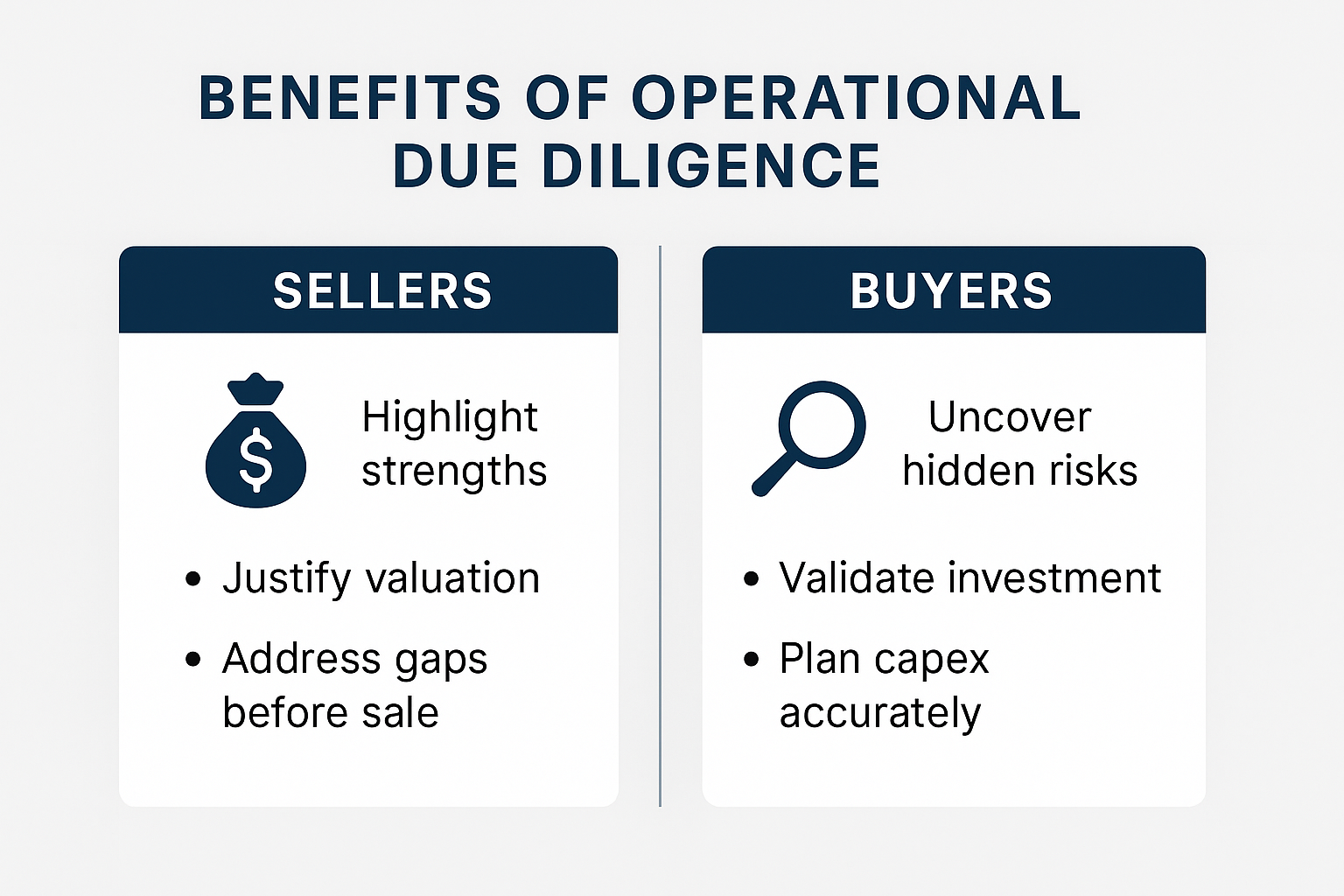
By proactively conducting an operational due diligence review, sellers can identify gaps and address them before going to market. Operational findings can inform valuation assumptions, negotiation, integration planning, and post-close capital requirements. Addressing gaps early may reduce surprises later in the transaction process.
For buyers
Financial statements can mask operational weaknesses. A plant might look profitable on paper but could be carrying substantial deferred maintenance, outdated tooling, or quality compliance risks. A structured operational due diligence examines:
- True equipment lifecycle and replacement costs.
- The real cost of scrap and downtime.
- Workforce skills and training levels.
- Compliance gaps that could trigger fines or recalls.
Early identification of operating risks can inform price and structure, capex planning, and post-close integration.
What an operational due diligence covers.
Plasteck Consulting's operational due diligence goes beyond a surface-level audit. It examines:
- Physical Plant & Infrastructure — readiness for expansion, energy efficiency, facility condition.
- Equipment & Tooling — machine health, calibration records, tooling lifecycle, cooling/drying systems.
- Operational Systems — cycle time validation, downtime tracking, ERP/MRP integration.
- Quality & Compliance — ISO standards, FDA documentation, OSHA safety practices, corrective action systems.
- Staff & Training — competency levels, cross-training, and reliance on tribal knowledge.
The value created.
Operating evidence that supports valuation assumptions and buyer confidence.
A clearer picture of operating risks and capex requirements.
A shared, evidence-based picture of the operation, which may reduce surprises during the transaction.
Benefits of operational due diligence.
Protect the value of your deal.
If you're planning to sell your injection molding business — or evaluating one for acquisition — don't rely on financials alone. Contact Plasteck Consulting to schedule a discovery conversation and discuss whether a Diligence & Readiness engagement fits your transaction.
Schedule a Discovery Conversation →